The latest from TechCrunch
- Pandora Presents: From The Web To Live Concerts And Back
- Christmas Day Online Spending Up 16.4 Percent; Mobile Sales Up 173 Percent
- Li Ka-shing Invests In HzO, Which Protects Your Gadgets From Water Damage
- Eight Ways To Go Viral
- Is Video The New Software?
- Today In Wishful Thinking: Dogbnb
- Guy Retweets Particularly Entitled Christmas Tweets, Becomes A Phenomenon
- The Case For Developer Platforms
- Video: Android 4.0 Hacked Onto The Kindle Fire
- 5 Simple (But Hidden!) Tricks All The New iPhone/iPad Owners Should Know
- GoDaddy Responds To Namecheap Accusations, Removes "Normal" Rate Limiting Block
- The Threat And Opportunity Of Mobile: How Physical Retailers Can Fight Back Against Amazon
- Apps Are Media
- Microsoft Is Way Overdue In Leaving CES Keynote – More Room For Companies That Ship
- Five Predictions For Online Video In 2012
- People Spend Twice As Much Time On Netflix Than On Hulu
- LG Prepping Ice Cream Sandwich Update For Q2 2012 Release
- Cooklet Aims To Disrupt The Stodgy Cooking Scene With Gingerbread Carp
- Streamonomy: Radionomy Opens Platform To Online, Traditional Radio Stations Alike
- Tango Card Aims To Make Gift Card Giving A More Personal Experience
| Pandora Presents: From The Web To Live Concerts And Back | Top |
 Music lovers, take note. After Pandora earlier this month announced that they would be launching a series of free, live concerts for some of their listeners, the personalized radio service this morning announced that it has extended the offering with a dedicated online hub. Dubbed Pandora Presents, the hub will feature live concert series, starting with the performance of rock band Dawes in Portland, organized earlier this month. Music lovers, take note. After Pandora earlier this month announced that they would be launching a series of free, live concerts for some of their listeners, the personalized radio service this morning announced that it has extended the offering with a dedicated online hub. Dubbed Pandora Presents, the hub will feature live concert series, starting with the performance of rock band Dawes in Portland, organized earlier this month. | |
| Christmas Day Online Spending Up 16.4 Percent; Mobile Sales Up 173 Percent | Top |
 It looks like consumers in the U.S. were shopping online alongside opening presents this year. According to IBM's Coremetrics retail data, online sales on Christmas Day grew by 16.4 percent from last year. Similar to trends seen over the Thanksgiving holidays, more shoppers were flocking to mobile devices to complete purchases. IBM says that 18.3 percent of all online sessions on retailers' sites were initiated from a mobile device, up from 8.4 percent in 2010 (an increase of 117.8 percent). It looks like consumers in the U.S. were shopping online alongside opening presents this year. According to IBM's Coremetrics retail data, online sales on Christmas Day grew by 16.4 percent from last year. Similar to trends seen over the Thanksgiving holidays, more shoppers were flocking to mobile devices to complete purchases. IBM says that 18.3 percent of all online sessions on retailers' sites were initiated from a mobile device, up from 8.4 percent in 2010 (an increase of 117.8 percent). | |
| Li Ka-shing Invests In HzO, Which Protects Your Gadgets From Water Damage | Top |
 Horizons Ventures, the Hong Kong-based firm that manages the private, early-stage investments in the technology sector for billionaire entrepreneur, philanthropist, business magnate and Facebook and Spotify investor Li Ka-shing, has acquired a $3 million stake in water damage protection technology company HzO as part of a preferred equity investment. HzO was originally acquired by ZAGG in 2009 but since spun off as an independent company to improve and commercialize its 'WaterBlock' technology. Horizons Ventures, the Hong Kong-based firm that manages the private, early-stage investments in the technology sector for billionaire entrepreneur, philanthropist, business magnate and Facebook and Spotify investor Li Ka-shing, has acquired a $3 million stake in water damage protection technology company HzO as part of a preferred equity investment. HzO was originally acquired by ZAGG in 2009 but since spun off as an independent company to improve and commercialize its 'WaterBlock' technology. | |
| Eight Ways To Go Viral | Top |
 What do Facebook, LinkedIn, Youtube, Dropbox and Skype have in common? Except for being ridiculously successful, they all enjoyed a strong viral effect that helped accelerate their growth. How did they do that? Here's the thing; most people assume that these companies grew by pure word of mouth. Well, that's only half of the story. The other half is that they deliberately built viral features into their products that helped spread the word. Let me explain. What do Facebook, LinkedIn, Youtube, Dropbox and Skype have in common? Except for being ridiculously successful, they all enjoyed a strong viral effect that helped accelerate their growth. How did they do that? Here's the thing; most people assume that these companies grew by pure word of mouth. Well, that's only half of the story. The other half is that they deliberately built viral features into their products that helped spread the word. Let me explain. | |
| Is Video The New Software? | Top |
 VC (TechCrunch contributor) Mark Suster published an article on his personal blog about one of his portfolio companies, Maker Studios. Other players in that space include The Collective and Fullscreen. While Mark is clearly rationalizing his investment, his reasoning is worth understanding. However, I could not help but wonder if one of the excerpts in this piece will make any difference with his technology-loving peers: VC (TechCrunch contributor) Mark Suster published an article on his personal blog about one of his portfolio companies, Maker Studios. Other players in that space include The Collective and Fullscreen. While Mark is clearly rationalizing his investment, his reasoning is worth understanding. However, I could not help but wonder if one of the excerpts in this piece will make any difference with his technology-loving peers: | |
| Today In Wishful Thinking: Dogbnb | Top |
 Like most people, I love dogs. But also like most people I am completely irresponsible -- Like, I can't even keep my iPhone charged let alone take care of another creature (Yeah I know, I'd be a great mother, we've already discussed this). Like most people, I love dogs. But also like most people I am completely irresponsible -- Like, I can't even keep my iPhone charged let alone take care of another creature (Yeah I know, I'd be a great mother, we've already discussed this). | |
| Guy Retweets Particularly Entitled Christmas Tweets, Becomes A Phenomenon | Top |
 This is the first Christmas where I didn't get a single gift. Because I had to take care of a bunch of logistics issues, I decided not to celebrate "the holidays" this year, and you know what? It was awesome. It's amazing not having any expectations about what you're going to get, give and whatnot. Also, for some reason I got tons of digital messages of gratitude in lieu of material gifts, and I absolutely adore all the people who reached out to say Merry Christmas, adore. This is the first Christmas where I didn't get a single gift. Because I had to take care of a bunch of logistics issues, I decided not to celebrate "the holidays" this year, and you know what? It was awesome. It's amazing not having any expectations about what you're going to get, give and whatnot. Also, for some reason I got tons of digital messages of gratitude in lieu of material gifts, and I absolutely adore all the people who reached out to say Merry Christmas, adore. | |
| The Case For Developer Platforms | Top |
 Over the years, software development has ping-ponged between server-centric and client-centric designs. Today, with dominant mobile platforms like iOS and Android, apps have entered a hybrid client-server architecture. What this means for developers is that they have to juggle more technologies than ever before. And in response, we're seeing the rise of developer platforms that handle functionality that has never been outsourced before—everything from databases to sending email to providing user authentication. As more software moves to the cloud so too does the development tools used to make the final product. Over the years, software development has ping-ponged between server-centric and client-centric designs. Today, with dominant mobile platforms like iOS and Android, apps have entered a hybrid client-server architecture. What this means for developers is that they have to juggle more technologies than ever before. And in response, we're seeing the rise of developer platforms that handle functionality that has never been outsourced before—everything from databases to sending email to providing user authentication. As more software moves to the cloud so too does the development tools used to make the final product. | |
| Video: Android 4.0 Hacked Onto The Kindle Fire | Top |
 You wanted an Android tablet for Christmas... and you got one! Alas, it's a Kindle Fire. Whoops! While the Fire is technically well within the realm of "Android tablet" (and a mighty fine tablet, for the price), it's not quite the tried-and-true vanilla Android experience you were looking for. Wait! Don't go requesting that return label just yet: if a gang of goodhearted hackers have their way, Amazon's wonderfully wallet-friendly tablet will be running the latest builds of straight-up Android (as in Ice Cream Sandwich) before too long. In fact, they've (sort of) already got it working. You wanted an Android tablet for Christmas... and you got one! Alas, it's a Kindle Fire. Whoops! While the Fire is technically well within the realm of "Android tablet" (and a mighty fine tablet, for the price), it's not quite the tried-and-true vanilla Android experience you were looking for. Wait! Don't go requesting that return label just yet: if a gang of goodhearted hackers have their way, Amazon's wonderfully wallet-friendly tablet will be running the latest builds of straight-up Android (as in Ice Cream Sandwich) before too long. In fact, they've (sort of) already got it working. | |
| 5 Simple (But Hidden!) Tricks All The New iPhone/iPad Owners Should Know | Top |
 Once upon a time, the iPhone was a simple thing. You flipped it on, slid the unlock switch, and what you saw was what you got. Since then, things have gotten a bit more... layered. That's not to say they've gotten any harder to use; iOS just has a ridiculous number of hidden bonus features now that are in no way immediately obvious to the untrained eye. Given that yesterday was Christmas, I'd wager that the number of untrained eyes out there is at an all-time high. This list is for them. Once upon a time, the iPhone was a simple thing. You flipped it on, slid the unlock switch, and what you saw was what you got. Since then, things have gotten a bit more... layered. That's not to say they've gotten any harder to use; iOS just has a ridiculous number of hidden bonus features now that are in no way immediately obvious to the untrained eye. Given that yesterday was Christmas, I'd wager that the number of untrained eyes out there is at an all-time high. This list is for them. | |
| GoDaddy Responds To Namecheap Accusations, Removes "Normal" Rate Limiting Block | Top |
 You know who got a lump of coal in their PR stocking this year? Domain registrar GoDaddy. Its most recent stumble? The company's presence on a SOPA supporter list sparked an impromptu user exodus last week, with already tens of thousands of domains being transferred in the fall out. Sensing a communications disaster (GoDaddy has gotten really good at this) the new CEO Warren Adelman then reversed the companies official position on SOPA, well kind of. You know who got a lump of coal in their PR stocking this year? Domain registrar GoDaddy. Its most recent stumble? The company's presence on a SOPA supporter list sparked an impromptu user exodus last week, with already tens of thousands of domains being transferred in the fall out. Sensing a communications disaster (GoDaddy has gotten really good at this) the new CEO Warren Adelman then reversed the companies official position on SOPA, well kind of. | |
| The Threat And Opportunity Of Mobile: How Physical Retailers Can Fight Back Against Amazon | Top |
 As online retail sales continue to soar, brick and mortar stores are seeing margins dissipate. Online holiday sales are expected to grow 15 percent to $37.6 billion this season while retail sales in physical stores are only expected to increase by 3.8 percent to $469.1 billion. Best Buy recently reported a 29 percent drop in profits because of discounts and sales of top grossing electronics. The fact is that the electronics retailer was probably forced into offering deeply discounted deals in order to compete with e-commerce giant Amazon. And it doesn't help that Amazon is now offering discounts to consumers on any product purchased via its price comparison mobile app, another huge blow to physical retailers. Brick and mortar retailers need to figure out a way to compete with Amazon and other e-commerce giants that doesn't eat into margins. Deals and coupons simply aren't enought. And as former Apple retail chief Ron Johnson has said, retail isn't broken, stores are. So how are retail stores going to survive? While mobile may be the technology e-commerce companies are using to jab physical stores, it is also the technology that may save these stores. Personalization and data are the two key factors that could save retail stores; and the vehicle by which these technologies can be utilized is via the mobile phone. As online retail sales continue to soar, brick and mortar stores are seeing margins dissipate. Online holiday sales are expected to grow 15 percent to $37.6 billion this season while retail sales in physical stores are only expected to increase by 3.8 percent to $469.1 billion. Best Buy recently reported a 29 percent drop in profits because of discounts and sales of top grossing electronics. The fact is that the electronics retailer was probably forced into offering deeply discounted deals in order to compete with e-commerce giant Amazon. And it doesn't help that Amazon is now offering discounts to consumers on any product purchased via its price comparison mobile app, another huge blow to physical retailers. Brick and mortar retailers need to figure out a way to compete with Amazon and other e-commerce giants that doesn't eat into margins. Deals and coupons simply aren't enought. And as former Apple retail chief Ron Johnson has said, retail isn't broken, stores are. So how are retail stores going to survive? While mobile may be the technology e-commerce companies are using to jab physical stores, it is also the technology that may save these stores. Personalization and data are the two key factors that could save retail stores; and the vehicle by which these technologies can be utilized is via the mobile phone. | |
| Apps Are Media | Top |
 Apps have taken over the world. If you doubt that just take a look at this app map by Horace Dediu at Asymco which shows the 123 countries in the world where iPhones are available. Of course, anywhere you can get an iPhone, you can get an iPhone app. Like the Web, apps are distributed globally. But when it comes to "media" like books, music, and movies, the distribution is much more limited on digital devices. Again, only looking at Apple, Dediu counts only 51 countries where music is available through the iTunes store, and only 6 countries where TV shows are available (see map below). My first reaction is that Apple really needs to broaden its licensing efforts internationally. But remember, iTunes started going international in 2004, and there are still more countries where you can get only apps (72) than both music and apps. Except there already is a global market for digital media. They are called apps, and they represent the future of media in many ways. Apps are media. Not only are they a form of media in the way that consumer software and games have always been considered media (they compete with TV, books, and music for consumers' time and attention). But increasingly, they are also subsuming other forms of media. Apps have taken over the world. If you doubt that just take a look at this app map by Horace Dediu at Asymco which shows the 123 countries in the world where iPhones are available. Of course, anywhere you can get an iPhone, you can get an iPhone app. Like the Web, apps are distributed globally. But when it comes to "media" like books, music, and movies, the distribution is much more limited on digital devices. Again, only looking at Apple, Dediu counts only 51 countries where music is available through the iTunes store, and only 6 countries where TV shows are available (see map below). My first reaction is that Apple really needs to broaden its licensing efforts internationally. But remember, iTunes started going international in 2004, and there are still more countries where you can get only apps (72) than both music and apps. Except there already is a global market for digital media. They are called apps, and they represent the future of media in many ways. Apps are media. Not only are they a form of media in the way that consumer software and games have always been considered media (they compete with TV, books, and music for consumers' time and attention). But increasingly, they are also subsuming other forms of media. | |
| Microsoft Is Way Overdue In Leaving CES Keynote – More Room For Companies That Ship | Top |
 The topic around the olives and cheese plate last week at an extended family Christmas gathering was, interestingly enough, Microsoft distancing itself from CES. My family, not ordinarily given to tech gossip, was alarmed, thinking that perhaps there was a grand re-ordering of things that they should know about. It's a remarkably straightforward move, far from the conspiracy theories the last few days have spawned, but when you're dealing with bruisers like Microsoft and CES, everything is swathed in diplomacy as would be ostensibly amicable divorce proceedings. But Microsoft's grievances are legitimate and the move is a smart one. "Our product news milestones generally don't align with the show's January timing." How true that is, and as others have pointed out, their product news generally didn't align with products, either. And they're aware that their news is propagating in a completely different way than it used to. The topic around the olives and cheese plate last week at an extended family Christmas gathering was, interestingly enough, Microsoft distancing itself from CES. My family, not ordinarily given to tech gossip, was alarmed, thinking that perhaps there was a grand re-ordering of things that they should know about. It's a remarkably straightforward move, far from the conspiracy theories the last few days have spawned, but when you're dealing with bruisers like Microsoft and CES, everything is swathed in diplomacy as would be ostensibly amicable divorce proceedings. But Microsoft's grievances are legitimate and the move is a smart one. "Our product news milestones generally don't align with the show's January timing." How true that is, and as others have pointed out, their product news generally didn't align with products, either. And they're aware that their news is propagating in a completely different way than it used to. | |
| Five Predictions For Online Video In 2012 | Top |
 In 2011, the long-promised ubiquity of video—on-demand anytime, anywhere—started to become a reality, driven by mobile (smart phones, tablets). While this may seem obvious, remember, it was not so long ago (a couple years, really) that most doubted that consumers would ever watch anything other than short-form YouTube-like video clips on the small screen. Consumers are now beginning to watch premium long-form video (TV, motion picture content) on their most important screen on a massive scale, despite the frequent paucity of compelling content offered by service providers. Yet, we are still in the early innings of this video revolution—so, we truly haven't seen anything yet. With this in mind, here are my predicted "big stories" for video in the coming year: In 2011, the long-promised ubiquity of video—on-demand anytime, anywhere—started to become a reality, driven by mobile (smart phones, tablets). While this may seem obvious, remember, it was not so long ago (a couple years, really) that most doubted that consumers would ever watch anything other than short-form YouTube-like video clips on the small screen. Consumers are now beginning to watch premium long-form video (TV, motion picture content) on their most important screen on a massive scale, despite the frequent paucity of compelling content offered by service providers. Yet, we are still in the early innings of this video revolution—so, we truly haven't seen anything yet. With this in mind, here are my predicted "big stories" for video in the coming year: | |
| People Spend Twice As Much Time On Netflix Than On Hulu | Top |
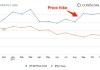 Netflix and Hulu are the two leading video streaming services on the Web when it comes to mainstream TV shows and movies. More people watch Netflix online than Hulu, and have since about 18 months ago. In November, 2011, comScore estimates that Netflix.com attracted 26.6 million unique visitors, versus 20.2 million for Hulu But a better metric to compare the two is how much time people actually spend at each site. And there Netflix trounces Hulu by two to one. U.S. visitors spent 1 billion minutes on Netflix.com in November, 2011, versus 480 million minutes on Hulu, according to comScore. (One caveat here is that people also go to Netflix.com to manage their DVD accounts and browse movie titles in addition to streaming videos, but the growth in time spent is most likely coming from streaming). Netflix has an edge over Hulu in that it streams more movies than TV shows, and those tend to be longer. But if that was the only factor, you'd expect to see the same ratio over time. Yet back in November, 2010, the two services were almost neck-and-neck in time spent, with Netflix users logging 750 million total minutes versus Hulu users logging 690 million. Netflix and Hulu are the two leading video streaming services on the Web when it comes to mainstream TV shows and movies. More people watch Netflix online than Hulu, and have since about 18 months ago. In November, 2011, comScore estimates that Netflix.com attracted 26.6 million unique visitors, versus 20.2 million for Hulu But a better metric to compare the two is how much time people actually spend at each site. And there Netflix trounces Hulu by two to one. U.S. visitors spent 1 billion minutes on Netflix.com in November, 2011, versus 480 million minutes on Hulu, according to comScore. (One caveat here is that people also go to Netflix.com to manage their DVD accounts and browse movie titles in addition to streaming videos, but the growth in time spent is most likely coming from streaming). Netflix has an edge over Hulu in that it streams more movies than TV shows, and those tend to be longer. But if that was the only factor, you'd expect to see the same ratio over time. Yet back in November, 2010, the two services were almost neck-and-neck in time spent, with Netflix users logging 750 million total minutes versus Hulu users logging 690 million. | |
| LG Prepping Ice Cream Sandwich Update For Q2 2012 Release | Top |
 Most of the big name Android smartphone vendors have already laid out their Ice Cream Sandwich upgrade plans, but LG has been notably absent from the list of companies offering an update schedule. Well, a brief announcement on the company's official Facebook page has remedied that -- Android 4.0 will be coming to select LG handsets as early as Q2 2012. Most of the big name Android smartphone vendors have already laid out their Ice Cream Sandwich upgrade plans, but LG has been notably absent from the list of companies offering an update schedule. Well, a brief announcement on the company's official Facebook page has remedied that -- Android 4.0 will be coming to select LG handsets as early as Q2 2012. | |
| Cooklet Aims To Disrupt The Stodgy Cooking Scene With Gingerbread Carp | Top |
 Cooklet, a Poland-based cooking site founded by Grzegorz Trubiłowicz, features a lot of what you'd expect - lots of recipes, a few pictures of happy-looking skinny people who you know don't eat much food, and some international flare. However, the rise of sites like Cooklet point to a change in the way people find recipes and make food. It's a transition from the standard cookbook-based economy of yesterday's kitchen to a more plugged-in experience we are now embracing. Cooklet, a Poland-based cooking site founded by Grzegorz Trubiłowicz, features a lot of what you'd expect - lots of recipes, a few pictures of happy-looking skinny people who you know don't eat much food, and some international flare. However, the rise of sites like Cooklet point to a change in the way people find recipes and make food. It's a transition from the standard cookbook-based economy of yesterday's kitchen to a more plugged-in experience we are now embracing. | |
| Streamonomy: Radionomy Opens Platform To Online, Traditional Radio Stations Alike | Top |
 Radionomy, which enables people to create and listen to radio stations online, is preparing the launch of a new service dubbed Streamonomy, which will essentially open up its platform to external radio stations, whether they broadcast online or the traditional, simulcast FM way. Streamonomy will also be available to online radio stations not produced with Radionomy, although the option to do so will of course remain available, free of charge. Radionomy, which enables people to create and listen to radio stations online, is preparing the launch of a new service dubbed Streamonomy, which will essentially open up its platform to external radio stations, whether they broadcast online or the traditional, simulcast FM way. Streamonomy will also be available to online radio stations not produced with Radionomy, although the option to do so will of course remain available, free of charge. | |
| Tango Card Aims To Make Gift Card Giving A More Personal Experience | Top |
 While gift cards are certainly a useful and practical gift, the act of giving a gift certificate to a store can be construed as impersonal. One startup is trying to change this. Tango Card, which offers a gift card program for consumers, is launching a new personalized experience, called 'What I Got.' For background, here's how Tango Card works. A purchaser can buy a Tango Card, and give this to a recipient via email. The recipient can then exchanges the value for the card for one or multiple retailer gift cards (Amazon, iTunes, Target, Starbucks, others) or they can donate any portion of their gift card to one of 9 non-profits (National Park Foundation, World of Children, Habitat for Humanity, etc.). Any unused value can actually be redeemed for cash. Basically, it provides a more flexible gift card option which allows recipients to choose and then stagger the proceeds of a gift card across various retailers or charities. While gift cards are certainly a useful and practical gift, the act of giving a gift certificate to a store can be construed as impersonal. One startup is trying to change this. Tango Card, which offers a gift card program for consumers, is launching a new personalized experience, called 'What I Got.' For background, here's how Tango Card works. A purchaser can buy a Tango Card, and give this to a recipient via email. The recipient can then exchanges the value for the card for one or multiple retailer gift cards (Amazon, iTunes, Target, Starbucks, others) or they can donate any portion of their gift card to one of 9 non-profits (National Park Foundation, World of Children, Habitat for Humanity, etc.). Any unused value can actually be redeemed for cash. Basically, it provides a more flexible gift card option which allows recipients to choose and then stagger the proceeds of a gift card across various retailers or charities. | |
CREATE MORE ALERTS:
Auctions - Find out when new auctions are posted
Horoscopes - Receive your daily horoscope
Music - Get the newest Album Releases, Playlists and more
News - Only the news you want, delivered!
Stocks - Stay connected to the market with price quotes and more
Weather - Get today's weather conditions
| You received this email because you subscribed to Yahoo! Alerts. Use this link to unsubscribe from this alert. To change your communications preferences for other Yahoo! business lines, please visit your Marketing Preferences. To learn more about Yahoo!'s use of personal information, including the use of web beacons in HTML-based email, please read our Privacy Policy. Yahoo! is located at 701 First Avenue, Sunnyvale, CA 94089. |

No comments:
Post a Comment