The latest from TechCrunch
- Chart: How Google And Apple Won The Smartphone Wars
- Beta Raspberry Pi PCs Draw Big Bids On eBay
- WhatsOutt Gives You The ETA On Everything
- Palm Software Director: "We Just Weren't Able To Execute"
- Sony Slashes Tablet S Price By $100
- They're Alive! Pics Of Unannounced Asus Eee PC Flare Netbooks Leak
- Wikimedia Foundation Raises $20 Million From 1 Million+ Donors
- Sleep Buster: Japanese Company Develops Anti-Sleep Driver Seat Sheet
- Gadgets Week in Review: New To You
- 6 Big HealthTech Ideas That Will Change Medicine In 2012
- GymPact Launches To Help You Keep Your Fitness Resolutions (By Paying If You Don't)
- Uber's New Year's Eve Surcharges Demonstrate The Harsh Reality Of Dynamic Pricing
- Still Looking For A New Year's Resolution? How About Learning To Code …
- Tech Comes To The Real World
- It's 2012 Already So Where Are All The Jetsons Flying Cars
- Weekly Wrist Watch Round Up
- Luxury Car-Sharing Service HiGear Shuts Down Due To Theft
- 60beat iPad Gaming Accessory Could Be The iOS Missing Link
- A Toast To Technology
- The Internet Is People
| Chart: How Google And Apple Won The Smartphone Wars | Top |
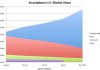 What a difference just one year can make. In our Year in Tech post, I pointed out that 2011 was the year that Apple and Google won the smartphone wars. I put together the chart above from comScore U.S. mobile subscriber estimates to illustrate the dramatic shift in market share in the smartphone market. In less than 18 months, Apple's and Google's combined market share of U.S. mobile subscribers for iPhones and Android phones went from 43.8 percent to 75.6 percent between August, 2010 and November, 2011. What a difference just one year can make. In our Year in Tech post, I pointed out that 2011 was the year that Apple and Google won the smartphone wars. I put together the chart above from comScore U.S. mobile subscriber estimates to illustrate the dramatic shift in market share in the smartphone market. In less than 18 months, Apple's and Google's combined market share of U.S. mobile subscribers for iPhones and Android phones went from 43.8 percent to 75.6 percent between August, 2010 and November, 2011. | |
| Beta Raspberry Pi PCs Draw Big Bids On eBay | Top |
 The pint-sized Raspberry Pi computer is due to hit doorsteps and developing markets any time now, but that hasn't stopped some ardent fans from igniting an eBay bidding war over some pre-production units. So far, the Raspberry Pi Foundation has put four pre-production models on eBay, and all of them command a pretty hefty premium over the vaunted $35 price tag that their mass-produced brethren will sport. The pint-sized Raspberry Pi computer is due to hit doorsteps and developing markets any time now, but that hasn't stopped some ardent fans from igniting an eBay bidding war over some pre-production units. So far, the Raspberry Pi Foundation has put four pre-production models on eBay, and all of them command a pretty hefty premium over the vaunted $35 price tag that their mass-produced brethren will sport. | |
| WhatsOutt Gives You The ETA On Everything | Top |
 If you're familiar with a site called VideoETA, which tells you when a movie will arrive on DVD, then you'll get the concept behind the new website called WhatsOutt.com. It's basically VideoETA for everything. The site keeps track of new and upcoming releases for movies coming to theaters, DVDs, books, music, and games. If you're familiar with a site called VideoETA, which tells you when a movie will arrive on DVD, then you'll get the concept behind the new website called WhatsOutt.com. It's basically VideoETA for everything. The site keeps track of new and upcoming releases for movies coming to theaters, DVDs, books, music, and games. | |
| Palm Software Director: "We Just Weren't Able To Execute" | Top |
 Hindsight, as they say, is 20/20 and Brian X Chen has a great tick-tock detailing the initial fall - and continuing fall - of WebOS. The interviews are quite telling, including a quote from Paul Mercer: Hindsight, as they say, is 20/20 and Brian X Chen has a great tick-tock detailing the initial fall - and continuing fall - of WebOS. The interviews are quite telling, including a quote from Paul Mercer: "Palm was ahead of its time in trying to build a phone software platform using Web technology, and we just weren't able to execute such an ambitious and breakthrough design," said Paul Mercer, former senior director of software at Palm, who oversaw the interface design of WebOS and recruited crucial members of the team. "Perhaps it never could have been executed because the technology wasn't there yet." | |
| Sony Slashes Tablet S Price By $100 | Top |
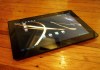 Apple's iPad still dominates the tablet market, and it would seem that competing tab makers are realizing how tough it is to go head-to-head with Apple's tablet. The latest proof: Sony has just slashed $100 off of the price of its Tablet S. In other words, the 32GB Tablet S just went from $600 to $500, while the 16GB model has dropped from $500 to $400. Apple's iPad still dominates the tablet market, and it would seem that competing tab makers are realizing how tough it is to go head-to-head with Apple's tablet. The latest proof: Sony has just slashed $100 off of the price of its Tablet S. In other words, the 32GB Tablet S just went from $600 to $500, while the 16GB model has dropped from $500 to $400. | |
| They're Alive! Pics Of Unannounced Asus Eee PC Flare Netbooks Leak | Top |
 Asus clearly didn't get the memo that netbooks are dead. Tablets killed them. Or rather so goes the popular narrative. In real life consumers will continue to look for low-cost alternatives to traditional notebooks and Asus will clearly be there, ready with new models to fill this increasingly niche demand. Asus clearly didn't get the memo that netbooks are dead. Tablets killed them. Or rather so goes the popular narrative. In real life consumers will continue to look for low-cost alternatives to traditional notebooks and Asus will clearly be there, ready with new models to fill this increasingly niche demand. | |
| Wikimedia Foundation Raises $20 Million From 1 Million+ Donors | Top |
 Wikimedia Foundation, the non-profit organization that operates Wikipedia and other sites, this morning announced that they've raised $20 million from more than a million donors, shattering a record once again. The organization says donations have risen every year since its global fundraising campaigns began in 2003. Wikimedia Foundation claims its websites now serve more than 470 million people every month. Wikipedia, which will celebrate its 11th anniversary in about two weeks, now boasts over 20 million articles in 282 languages. Wikimedia Foundation, the non-profit organization that operates Wikipedia and other sites, this morning announced that they've raised $20 million from more than a million donors, shattering a record once again. The organization says donations have risen every year since its global fundraising campaigns began in 2003. Wikimedia Foundation claims its websites now serve more than 470 million people every month. Wikipedia, which will celebrate its 11th anniversary in about two weeks, now boasts over 20 million articles in 282 languages. | |
| Sleep Buster: Japanese Company Develops Anti-Sleep Driver Seat Sheet | Top |
 There are quite a few systems and gadgets on the market already that prevent people from falling asleep whilst driving, but Japan-based Juki has developed an entirely new one: a sheet [JP, PDF] that can be mounted on the driver's seat and triggers an alarm when you're about to doze off. The way the so-called Sleep Buster works is that it measures signals from the heart and aorta through a built-in sensor. A piece of software called "Human Tachometer" then visualizes the condition of the driver on a controller: apart from fatigue or drowsiness, users can also check their level of concentration or how distracted they are, for example. There are quite a few systems and gadgets on the market already that prevent people from falling asleep whilst driving, but Japan-based Juki has developed an entirely new one: a sheet [JP, PDF] that can be mounted on the driver's seat and triggers an alarm when you're about to doze off. The way the so-called Sleep Buster works is that it measures signals from the heart and aorta through a built-in sensor. A piece of software called "Human Tachometer" then visualizes the condition of the driver on a controller: apart from fatigue or drowsiness, users can also check their level of concentration or how distracted they are, for example. | |
| Gadgets Week in Review: New To You | Top |
 Here are some stories from the past week on TechCrunch Gadgets: Tech Comes To The Real World It's 2012 Already So Where Are All The Jetsons Flying Cars Video: Electric Car From Japan Reaches Over 300KM Travel Range LG Prada 3.0 Makes Official Debut In Korea, Europe To Follow Fire Emblem: Nintendo Announces First 3DS Game With Paid Download Content Here are some stories from the past week on TechCrunch Gadgets: Tech Comes To The Real World It's 2012 Already So Where Are All The Jetsons Flying Cars Video: Electric Car From Japan Reaches Over 300KM Travel Range LG Prada 3.0 Makes Official Debut In Korea, Europe To Follow Fire Emblem: Nintendo Announces First 3DS Game With Paid Download Content | |
| 6 Big HealthTech Ideas That Will Change Medicine In 2012 | Top |
 "In the future we might not prescribe drugs all the time, we might prescribe apps." Singularity University's executive director of FutureMed Daniel Kraft M.D. sat down with me to discuss the biggest emerging trends in HealthTech. Here we'll look at how A.I, big data, 3D printing, social health networks and other new technologies will help you get better medical care. "In the future we might not prescribe drugs all the time, we might prescribe apps." Singularity University's executive director of FutureMed Daniel Kraft M.D. sat down with me to discuss the biggest emerging trends in HealthTech. Here we'll look at how A.I, big data, 3D printing, social health networks and other new technologies will help you get better medical care. | |
| GymPact Launches To Help You Keep Your Fitness Resolutions (By Paying If You Don't) | Top |
 If you're anything like me, one of your New Years Resolutions may have been to get in better shape. There's no doubt that many of us could stand to live healthier lives, and it's no mistake that devices, services, and tools that help us achieve healthier lifestyles and decreased body masses are on the rise. (See John Biggs' predictions for hot gadgets in 2012 -- you'll notice two fitness gadgets at the top of the list.) Americans spend $50 billion each year on products and services designed to help us lose weight and get in shape. We've seen a host of startups proposing alternative methods to encourage us to stick with out fitness regimens, and today GymPact is launching a website and iPhone app that uses those old behavioral economics to help us to do just that. If you're anything like me, one of your New Years Resolutions may have been to get in better shape. There's no doubt that many of us could stand to live healthier lives, and it's no mistake that devices, services, and tools that help us achieve healthier lifestyles and decreased body masses are on the rise. (See John Biggs' predictions for hot gadgets in 2012 -- you'll notice two fitness gadgets at the top of the list.) Americans spend $50 billion each year on products and services designed to help us lose weight and get in shape. We've seen a host of startups proposing alternative methods to encourage us to stick with out fitness regimens, and today GymPact is launching a website and iPhone app that uses those old behavioral economics to help us to do just that. | |
| Uber's New Year's Eve Surcharges Demonstrate The Harsh Reality Of Dynamic Pricing | Top |
 I woke up this morning to tweets from Uber customers nationwide who felt taken for a ride, literally and figuratively, after requesting an Uber on one of the busiest nights of the year. Despite the fact the company said as such on their blog and communication channels, riders were apparently not expecting the surcharges to be so exponentially high. In exchange for providing cars on demand, Uber used their system to find equilibrium within a market where demand outstripped supply, especially a few hours before and midnight. (I'm not a frequent Uber customer, but I used them three times over my recent holiday trip, and each time was flawless; I'll continue to use the service when I need to.) Uber's hangover this morning is more of a harbinger for consumers in general, especially when it comes to goods and services delivered online. Uber's "surcharges" last night were a classic example of dynamic pricing, or adjusting the price of something relative to the demand and supply, down to the minute or second. The more data a provider has on these inputs, the more likely they are to leverage that data to extract more value from providing equilibrium between supply and demand. Most every consumer is aware of this through searching for and buying airline tickets online, where fares seem to change magically, even mid-search. I woke up this morning to tweets from Uber customers nationwide who felt taken for a ride, literally and figuratively, after requesting an Uber on one of the busiest nights of the year. Despite the fact the company said as such on their blog and communication channels, riders were apparently not expecting the surcharges to be so exponentially high. In exchange for providing cars on demand, Uber used their system to find equilibrium within a market where demand outstripped supply, especially a few hours before and midnight. (I'm not a frequent Uber customer, but I used them three times over my recent holiday trip, and each time was flawless; I'll continue to use the service when I need to.) Uber's hangover this morning is more of a harbinger for consumers in general, especially when it comes to goods and services delivered online. Uber's "surcharges" last night were a classic example of dynamic pricing, or adjusting the price of something relative to the demand and supply, down to the minute or second. The more data a provider has on these inputs, the more likely they are to leverage that data to extract more value from providing equilibrium between supply and demand. Most every consumer is aware of this through searching for and buying airline tickets online, where fares seem to change magically, even mid-search. | |
| Still Looking For A New Year's Resolution? How About Learning To Code … | Top |
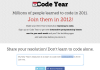 After eating something greasy to get rid of last night's After eating something greasy to get rid of last night's | |
| Tech Comes To The Real World | Top |
 2011 saw many interesting developments in the virtualization of goods. The growth of app stores continued unabated, aided by huge sales of iOS devices and Android handsets, and media of all kinds continued the move to a totally non-physical state for the end user: Netflix, Spotify, and other services make the idea of storing your things, whether on your hard drive or in stacks by the TV, seem very... 2010. Widespread adoption of non-physical media is sparking new industries and setting fire to old ones. But we also are seeing increasing frustration with the limitation of our digital acts to affecting digital things, and vice versa. The cutting edge of technology seems to be confined to the borders of our screens. People don't freak out about the Nest or the Little Printer because they're really such revolutionary devices - they aren't. People are excited because these things portend the fulfillment of the promise technology has unwittingly made: that it will change the way we live, not just the way we consume. 2011 saw many interesting developments in the virtualization of goods. The growth of app stores continued unabated, aided by huge sales of iOS devices and Android handsets, and media of all kinds continued the move to a totally non-physical state for the end user: Netflix, Spotify, and other services make the idea of storing your things, whether on your hard drive or in stacks by the TV, seem very... 2010. Widespread adoption of non-physical media is sparking new industries and setting fire to old ones. But we also are seeing increasing frustration with the limitation of our digital acts to affecting digital things, and vice versa. The cutting edge of technology seems to be confined to the borders of our screens. People don't freak out about the Nest or the Little Printer because they're really such revolutionary devices - they aren't. People are excited because these things portend the fulfillment of the promise technology has unwittingly made: that it will change the way we live, not just the way we consume. | |
| It's 2012 Already So Where Are All The Jetsons Flying Cars | Top |
 As we enter 2012, shouldn't we all be traveling around in flying cars by now? That was the prediction in the Jetsons cartoon tv show. The futuristic series, first produced by Hanna-Barbera in 1962, was set in 2062, exactly 50 years from today. 2012 is the halfway point, so we've still got some time before we are all driving around in flying cars. But, many other technology advances from the Jetsons are already with us. As we enter 2012, shouldn't we all be traveling around in flying cars by now? That was the prediction in the Jetsons cartoon tv show. The futuristic series, first produced by Hanna-Barbera in 1962, was set in 2062, exactly 50 years from today. 2012 is the halfway point, so we've still got some time before we are all driving around in flying cars. But, many other technology advances from the Jetsons are already with us. | |
| Weekly Wrist Watch Round Up | Top |
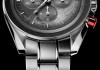 The famous and very iconic Omega Speedmaster Moonwatch get's "Watch What-Iffed" using Photoshop to explore what variations on the core design would look like. A new analog & digital combination watch for pilots was just announced by Hamilton called the Khaki Flight Timer. It has loads of features in a conservative Swiss package. The famous and very iconic Omega Speedmaster Moonwatch get's "Watch What-Iffed" using Photoshop to explore what variations on the core design would look like. A new analog & digital combination watch for pilots was just announced by Hamilton called the Khaki Flight Timer. It has loads of features in a conservative Swiss package. | |
| Luxury Car-Sharing Service HiGear Shuts Down Due To Theft | Top |
 San Francisco-based HiGear, a peer-to-peer car-sharing service focused on luxury vehicles, is shutting down due to theft incidents involving its members' cars. According to CEO Ali Moiz, the company will send out an email tomorrow to its members with a full explanation. The news may come as a shock to some, given that HiGear was seemingly doing so well in recent months. The company had expanded to L.A. in November, and was planning expansions to additional markets, including Portland and San Diego, by year-end. San Francisco-based HiGear, a peer-to-peer car-sharing service focused on luxury vehicles, is shutting down due to theft incidents involving its members' cars. According to CEO Ali Moiz, the company will send out an email tomorrow to its members with a full explanation. The news may come as a shock to some, given that HiGear was seemingly doing so well in recent months. The company had expanded to L.A. in November, and was planning expansions to additional markets, including Portland and San Diego, by year-end. | |
| 60beat iPad Gaming Accessory Could Be The iOS Missing Link | Top |
| It appears the iPad gamepad of our dreams has finally arrived. The 60beat is a full-sized gamepad designed for iOS devices and it connects to iPads and iPhones via the headphone jack. While there aren't many games that support the technology (yet), the concept is fairly simple. The controller works by sending signals through the devices' microphone jack. | |
| A Toast To Technology | Top |
 I hold the unpopular opinion that technology - more specifically the proliferation of social media - is not intrinsically "good" in any sense. Social media is, however, important, and I propose we raise our glasses of good cheer to what social media and its related technologies have wrought around the world this past year and the good it will, in real terms, do in the future. The great lie of social technology is that propagandists fear it for its ability to connect us in unified opposition. This is untrue. A status update cannot rally a crowd in flux. There are far superior tools too do this in a protest environment, namely SMS and good old "shouting." Facebook is useless when soldiers are firing into your Google Plus circle. What social media does and has done is reduce the barriers between people and expose the lie that any one place is better than the other. It also shows us, in very real terms, that humans are humans wherever they are. This is what frightens dictators and false potentates the most: the great leveling of human experience. I hold the unpopular opinion that technology - more specifically the proliferation of social media - is not intrinsically "good" in any sense. Social media is, however, important, and I propose we raise our glasses of good cheer to what social media and its related technologies have wrought around the world this past year and the good it will, in real terms, do in the future. The great lie of social technology is that propagandists fear it for its ability to connect us in unified opposition. This is untrue. A status update cannot rally a crowd in flux. There are far superior tools too do this in a protest environment, namely SMS and good old "shouting." Facebook is useless when soldiers are firing into your Google Plus circle. What social media does and has done is reduce the barriers between people and expose the lie that any one place is better than the other. It also shows us, in very real terms, that humans are humans wherever they are. This is what frightens dictators and false potentates the most: the great leveling of human experience. | |
| The Internet Is People | Top |
 There's always been a tension on the Internet between humans and algorithms. In the early days, Yahoo was a human-curated index, remember? But humans couldn't keep up, and the algorithms took over. Today, the human factor is rising in importance once again with Facebook, Twitter, and countless mobile applications like Instagram. Everything is social. The tension today is between social and search—humans versus computers. Except that it isn't so simple. The Internet is not just billions of linked pages, databases, and (increasingly) mobile apps. The Internet is people. It's you and me. There's always been a tension on the Internet between humans and algorithms. In the early days, Yahoo was a human-curated index, remember? But humans couldn't keep up, and the algorithms took over. Today, the human factor is rising in importance once again with Facebook, Twitter, and countless mobile applications like Instagram. Everything is social. The tension today is between social and search—humans versus computers. Except that it isn't so simple. The Internet is not just billions of linked pages, databases, and (increasingly) mobile apps. The Internet is people. It's you and me. | |
CREATE MORE ALERTS:
Auctions - Find out when new auctions are posted
Horoscopes - Receive your daily horoscope
Music - Get the newest Album Releases, Playlists and more
News - Only the news you want, delivered!
Stocks - Stay connected to the market with price quotes and more
Weather - Get today's weather conditions
| You received this email because you subscribed to Yahoo! Alerts. Use this link to unsubscribe from this alert. To change your communications preferences for other Yahoo! business lines, please visit your Marketing Preferences. To learn more about Yahoo!'s use of personal information, including the use of web beacons in HTML-based email, please read our Privacy Policy. Yahoo! is located at 701 First Avenue, Sunnyvale, CA 94089. |

No comments:
Post a Comment